How to Use Coin Lockers in Japan (Complete 2026 Guide)
Coin lockers in Japan are one of the most convenient ways to store luggage while exploring cities, transferring between hotels, or waiting for check‑in. They’re safe, affordable, and available in nearly every major station, mall, and attraction.
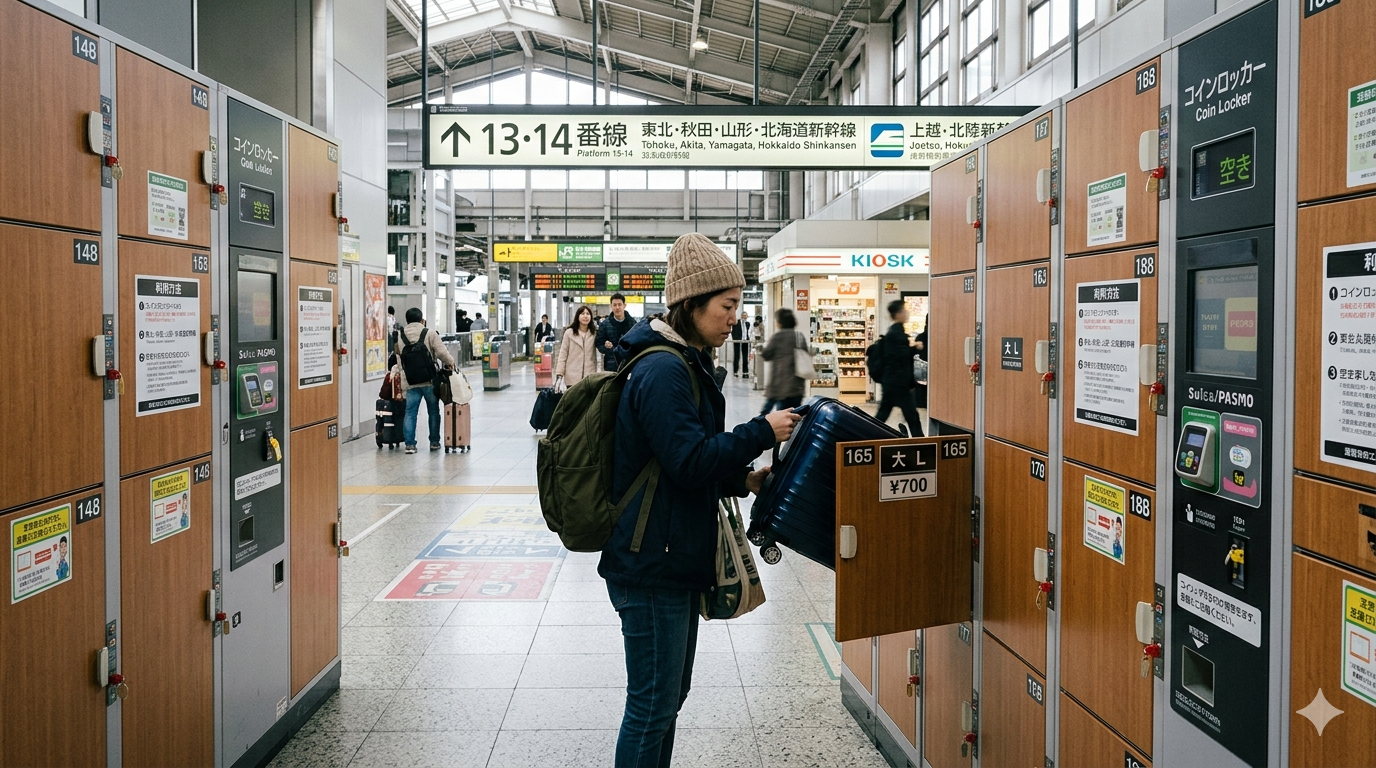
What Coin Lockers Are
Coin lockers are self‑service storage boxes that allow you to temporarily store bags, suitcases, and personal items. They come in multiple sizes and are available as modern IC‑card lockers or older coin‑only lockers.
Locker Sizes & Prices (2026 Updated)
Japan’s coin lockers follow standardized dimensions across most major stations. Below is a merged table combining size and price into one clean reference. Information up to April 2026 and varies by station
| Size | Dimensions (H × W × D) | Typical Cost (per day) |
|---|---|---|
| Small | 35 × 34 × 57 cm | ¥300–¥400 |
| Medium | 55 × 34 × 57 cm | ¥400–¥600 |
| Large | 84-117 × 34 × 57 cm | ¥700–¥900 |
| Extra‑large | 103-177 × 34 × 57 cm | ¥900–¥1,500 |
Minimum Renting Time & Daily Charges
Japan’s coin lockers charge per calendar day (midnight to midnight, or sometimes around 2:00 AM), not by a rolling 24-hour period from the time you lock the door.
- Even if you use the locker for only 10 minutes or 10 hours, you pay the full daily fee.
- If you leave your bag overnight and it crosses the reset time (usually midnight or 2:00 AM), you will be charged for two full days.
- Example: Drop your bag at 11 PM and pick it up at 8 AM → you pay for two days.
The “Calendar Day Reset” Rule (Important!)
Most coin lockers reset at midnight or around 2:00 AM, depending on the station. If your bag is still inside at reset time, the system automatically adds another full day’s fee — even if you only used it for a few hours overnight.
How Long Until Staff Remove Your Items?
Most stations follow a 3-day (72-hour) rule:
- Day 1: First calendar day fee.
- Day 2: Second calendar day fee (added at reset time).
- Day 3: Third calendar day fee (added at reset time).
- After 3 days / on the morning of the 4th day: Station staff typically unlock the locker, remove your luggage, and move it to the lost-and-found office. You can usually claim it later by paying the accumulated fees.
IC Card Lockers vs Coin‑Only Lockers
IC Card Lockers (Recommended)
- Unlock with the same Suica, PASMO, or ICOCA card.
- No paper key to lose.
- Extra days are auto‑charged. (Most of them, but not all)
- Fast and tourist‑friendly.
Coin‑Only Lockers (Older Style)
- Requires ¥100 coins.
- Prints a QR code or PIN receipt (some still use physical keys or simple tickets).
- You must keep the receipt safe – it is your key.
- No auto‑charge; you pay again manually if you exceed the time limit.
Safety: Can Anyone Steal Your Items?
Theft from coin lockers in Japan is extremely rare. Japan’s low crime rate and locker design make them very secure.
- Lockers are located in monitored areas with CCTV and staff nearby.
- IC‑card authentication prevents unauthorized access.
- Reinforced metal construction makes forced entry difficult and conspicuous.
- It is still advised not to leave valuables/high-value items at any public locker
How to Use Coin Lockers (Step‑by‑Step)
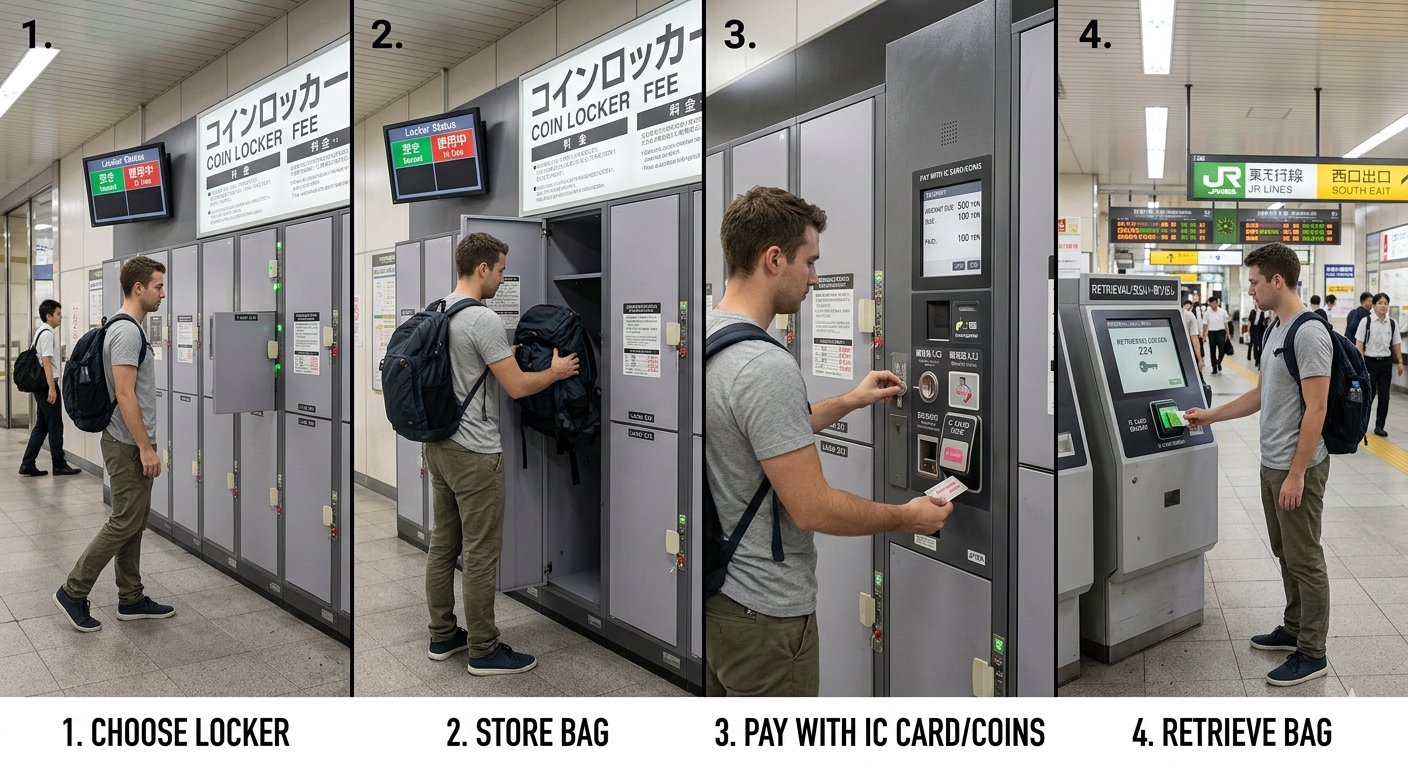
- Choose a locker size: Pick small, medium, large, or extra‑large depending on your luggage.
- Place your luggage inside: Make sure the door closes fully.
- Pay using IC card or coins:
- Tap your IC card on the reader, or
- Insert coins until payment is complete.
- If using coins, keep the printed QR/PIN receipt safe – it contains your unlock code.
- Retrieve your luggage:
- Tap the same IC card again, or enter the PIN / scan the QR code.
- Pay any additional fee if more than 24 hours have passed.
Usage Tips
- The 24‑Hour Rule: Some lockers reset at midnight or 2:00 AM, which can trigger an extra day’s fee.
- The receipt is your key: IC card = your key; coins = your printed QR/PIN slip is your key.
- Maximum duration: Most lockers allow storage for up to three days before staff remove items.
- Take a photo: Photograph your locker number and its location.
- Check multiple floors: Large stations often have lockers on several levels.
- If full: Look for nearby baggage storage counters or use an app‑based alternative like ecbo cloak.
Finding Available Coin Lockers in Japan
Real‑time tools make it much easier to locate free lockers in huge stations like Shinjuku, Shibuya, Tokyo Station, Ikebukuro, and Osaka‑Umeda.
1) Real‑Time Availability Tools
Locker Concierge (Web & App)
- Best for Tokyo Metro stations.
- Shows free lockers, sizes, and exact locations.
- Covers 40+ major stations including Shinjuku, Shibuya, Ginza, and Ikebukuro.
Multi‑Ecube
- Supports major hubs like Tokyo Station.
- Allows reservations up to one month in advance.
- Shows real‑time availability by size and locker bank location.
Suica Coin Locker Search (Station Terminals)
- Large touchscreen monitors near locker banks.
- Display a live map of locker availability:
- Green = many available.
- Orange = almost full.
2) Reservation & Alternative Storage Apps
ecbo cloak
- Book storage in shops, cafés, hotels, and coworking spaces.
- Accepts oversized items like strollers and surfboards.
- Typical cost: around ¥500/day for small bags and ¥800/day for large suitcases.(varies by location)
SPACER
- App‑based smart locker system.
- Available in major stations such as Shinjuku, Shibuya, Osaka, and Nagoya.
- Find, reserve, and unlock lockers directly from your phone.
3) Regional & Specialized Tools
Coin Locker Navi
- Japan‑wide locker directory.
- Best for finding lockers in regional cities and smaller stations.
Toei Transportation App
- Provides station maps and facility information for Toei Subway lines in Tokyo.
- Helps you locate locker areas, exits, and other station services.
Where You’ll Find Coin Lockers
- JR stations (Tokyo, Osaka, Kyoto, Sapporo, Fukuoka).
- Subway stations.
- Shopping malls and department stores.
- Theme parks (Tokyo Disney Resort, Universal Studios Japan).
- Museums and major attractions.
- Airports (Narita, Haneda, Kansai).